
"The Fifth Element": When the Future Meets Science Fiction
Released in 1997, The Fifth Element is a cult science fiction film directed by Luc Besson. Between futuristic urbanism, technological advancements, and cosmic intrigue, this feature film offers a fascinating vision of the future, where the architecture of megacities becomes a character in its own right.
By Titouan Winkel
published on October 23, 2024 at 6:00 PM
A futuristic and colorful visual universe
One of the great strengths of The Fifth Element is its visual universe, which depicts an exuberant and detailed future.
The film is set in 2263, in a vertical city where skyscrapers seem endless and flying cars have replaced ground transportation.
This vision of tomorrow's urbanization, blending modernity and organized chaos, reflects the dreams and fears of our own era regarding the evolution of cities.
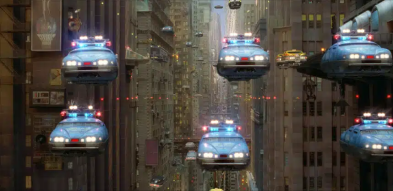
"The architecture of tomorrow in The Fifth Element: a megacity where verticality and constant movement redefine our living space."
The film's sets, inspired by science fiction comics and the works of the famous artist Jean Giraud, also known as Moebius, immerse the viewer in a future that is both fascinating and oppressive, where technology coexists with an overcrowded urban environment.
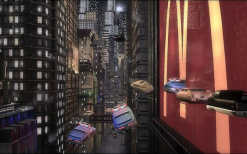
The Humanization of the Future: Between Technology and Spirituality
Beyond its futuristic aesthetics, the film offers a deeper reflection on the place of humanity in the face of technology.
The plot follows the journey of Korben Dallas (Bruce Willis) and Leeloo (Milla Jovovich), a divine being, in their quest to save Earth from destruction. Through this intergalactic journey, The Fifth Element explores themes of technology, spirituality, and the importance of love in a world undergoing transformation.
"The true 'fifth element' is neither science nor technology, but love, a primordial force capable of saving humanity."
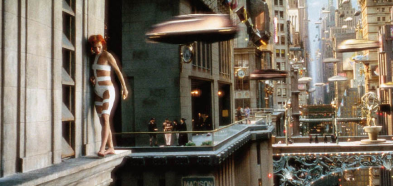
A Lasting Legacy in Pop Culture
More than 25 years after its release, The Fifth Element remains an essential reference in the world of science fiction.
Its unique vision of the future and its blend of genres (action, comedy, fantasy) make it a standout film, still widely celebrated in pop culture.

Luc Besson imagined a future where urbanism is pushed to the extreme, and where environmental and overpopulation issues resonate with our contemporary concerns.
The film, with its blend of retro-futuristic aesthetics and timeless themes, invites reflection on how our cities will evolve in the centuries to come.